
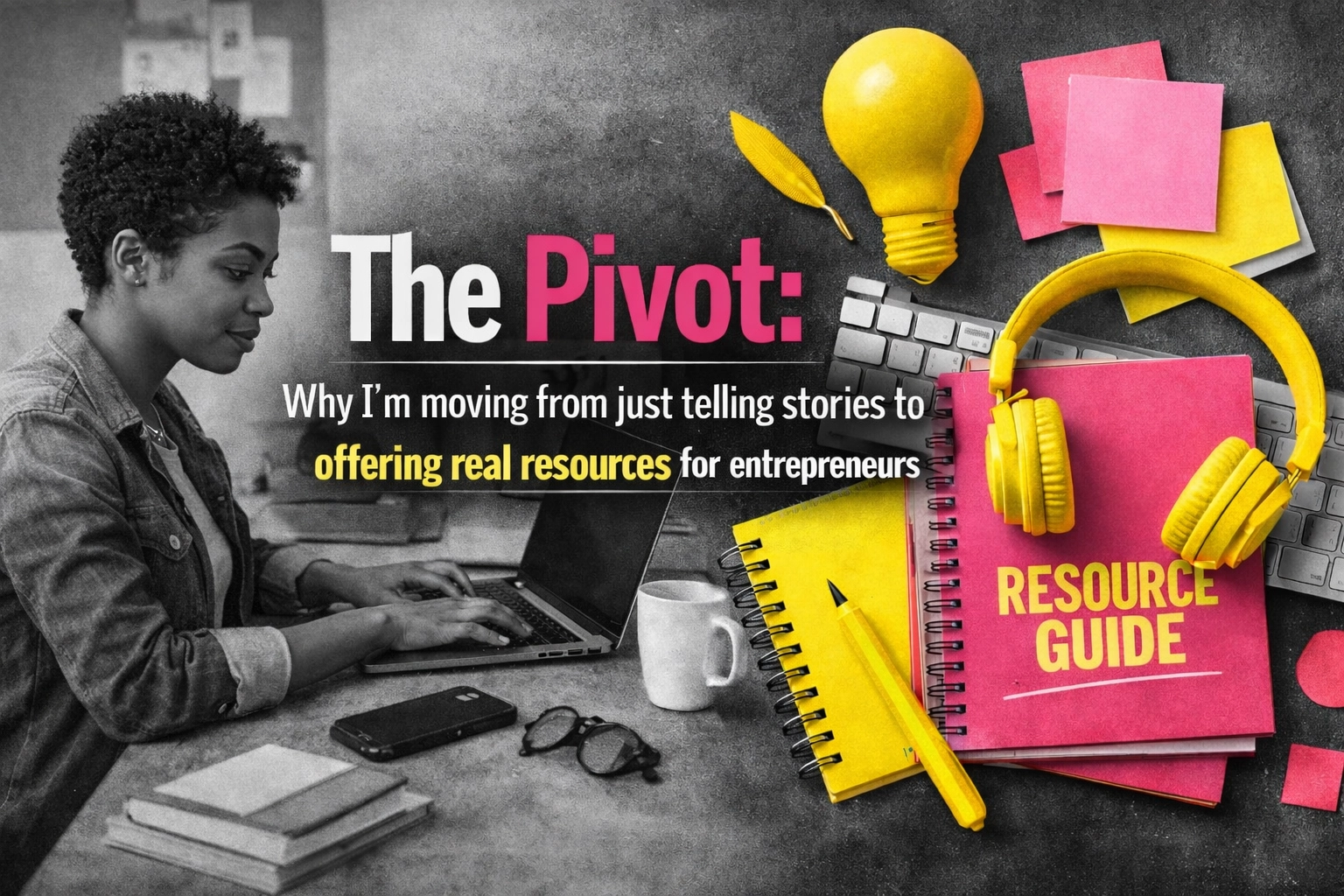

I love telling stories…
Always have.
Books. Film. TV. The whole thing.
There’s something about crafting a narrative… finding the arc… making people feel something.
I spent years doing that.
Building characters. Writing scripts. Pitching to rooms full of people who controlled the money.
And I’m pretty good at it.
But somewhere along the way, I started noticing something…
The stories weren’t changing anything.
The Problem With Being a Narrator
Here’s what I mean.
I could write the most beautiful story about an indie founder struggling to build something from nothing.
I could make you cry.
Make you root for them.
Make you see them.
But then what?
When the credits rolled… when you closed the book… what actually changed for that real person living that life?
Nothing.
Because representation is powerful.
But representation doesn’t pay rent.
It doesn’t give you the infrastructure to build.
It doesn’t teach you how to negotiate equity or protect your IP or find capital when the traditional routes won’t let you in.
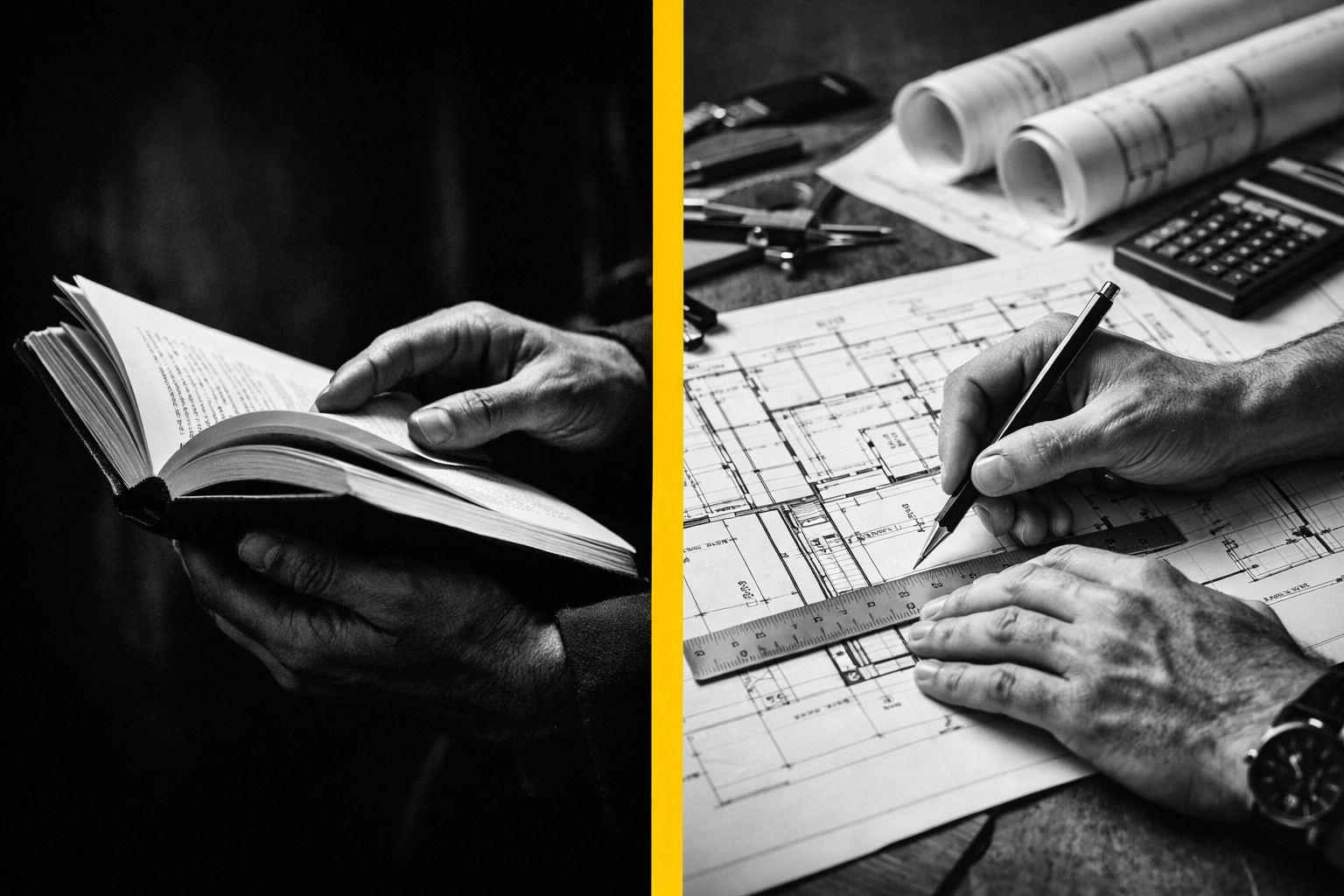
Stories describe the world.
They hold up a mirror.
But they don’t build anything.
And that’s the difference between being a Narrator and being an Architect.
Narrators vs. Architects
Let me break this down.
Narrators tell you what’s happening.
They document the struggle. The injustice. The triumph.
They make you feel seen.
And that matters… I’m not dismissing it.
But Architects?
Architects build the infrastructure you need to actually live in the world differently.
They don’t just describe the problem.
They create the solution.
They say: “This system doesn’t work for us? Cool. Let’s build a new one.”
And that’s where I realized I needed to pivot.
Because I was tired of just describing what it’s like to be an indie creator in a world that doesn’t have a seat for you.
I wanted to build the stadium where you could actually play.
The Responsibility of the Modern Artist-Entrepreneur
Here’s the truth…
If you’re a creator in 2026 and you’re not also thinking like a founder?
You’re leaving people behind.
Including yourself.
The old model was: make art, hope someone discovers you, let them handle the business side.
But that model only worked if the gatekeepers wanted to let you in.
And if you didn’t fit their “uniform”, if you were too indie, too niche, too you, you were out.
So what’s the new model?
You become the gatekeeper.
You don’t just tell the story.
You build the platform. The product. The community. The resources.
You move from representation to ownership.
From visibility to utility.
And yes, that’s scarier.
It requires skills most of us weren’t taught.
Business plans. Cap tables. Product development. Marketing funnels.
But it’s also the only way to create material change for the people who look like you, think like you, and are trying to build like you.
Why I’m Building Siingle (and What It Represents)
So here’s what that pivot looks like for me.
I’m still a storyteller.
That’s never going away.
But I’m also building Siingle, a product and community specifically for progressive, out-the-box thinkers navigating entrepreneurship, career (including pivots), and life without a traditional playbook.
Because I got tired of writing stories about people who felt alone in their journey…
…and then leaving them alone in real life.
Siingle isn’t just content.
It’s infrastructure.
Resources. Tools. A space where “single” isn’t a deficit, it’s a strategic advantage.
Where being indie isn’t something you apologize for, it’s your superpower.
And that’s the pivot.
From telling the story of the underdog…
…to building the ecosystem where the underdog can win.
What This Means for You
If you’re reading this and thinking, “I’ve been creating content for years but I’m still broke”…
This is for you.
If you’ve been pitching your art to people who don’t understand it, don’t value it, and definitely won’t compensate you fairly for it…
This is for you.

The question isn’t: “Should I stop being creative?”
The question is: “What can I build that gives my creativity a home?”
Maybe it’s a product.
Maybe it’s a service.
Maybe it’s a membership community.
Maybe it’s a course, a tool, a platform, a space.
But it has to be something tangible.
Something that creates value beyond the feeling.
Because feelings fade.
But infrastructure?
Infrastructure lasts.
The New Responsibility
Here’s what I think we owe each other as artists-turned-entrepreneurs:
1. Stop waiting for permission.
If the industry won’t build the table for you, build your own. Invite who you want. Set the rules.
2. Build resources, not just content.
Content gets consumed. Resources get used. Know the difference.
3. Think like an architect.
Ask yourself: What system can I create that makes it easier for the next person? What infrastructure am I leaving behind?
4. Own your work.
Equity. IP. Revenue. Don’t just create value for someone else’s platform. Build your own.
5. Help people survive and thrive.
Representation is step one. Resources are step two. Don’t stop at step one.
The Bottom Line
I didn’t stop loving stories.
I just realized that the best story I can tell is the one where we all win.
Not just on screen.
Not just on the page.
But in real life.
With real tools. Real equity. Real ownership.
So yeah, I’m pivoting.
From Narrator to Architect.
From telling you what’s broken…
…to building what works.
And if you’re ready to make that same shift?
Welcome to the construction site.
Let’s build.
Ready to start building your own infrastructure? Check out what we’re creating and join the movement from content creator to founder.